AI is forcing the residential sector to confront the S in ESG
At first glance, artificial intelligence and the S in ESG have little to do with each other. I believe the opposite. In residential real estate in particular, AI could force us to correct a persistent misconception: our tendency to equate ESG with E. When it comes to the E for environmental, we tend to think long-term.
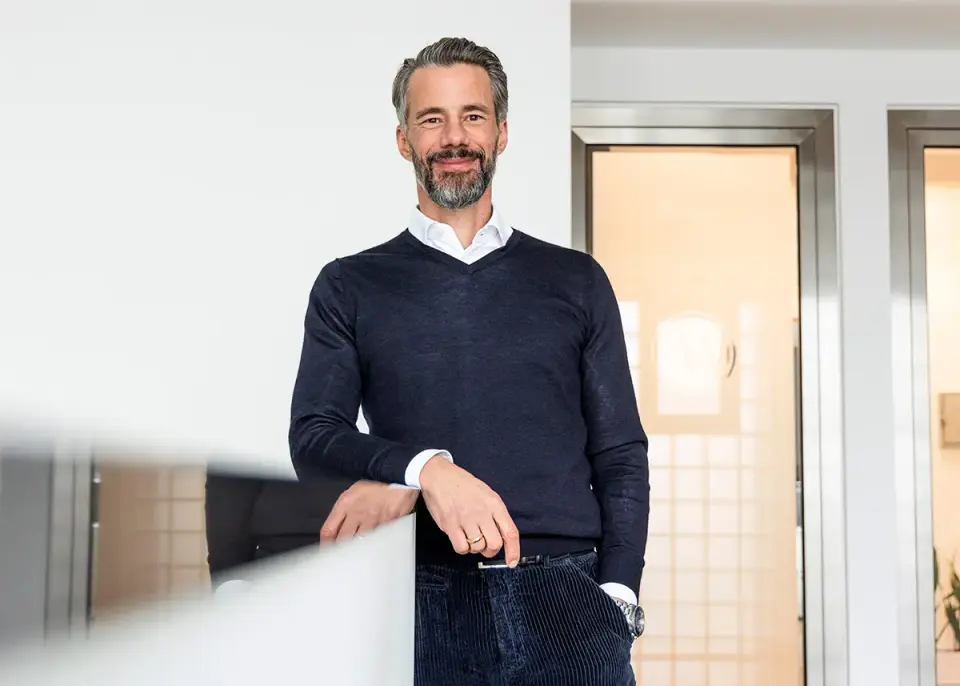
Thomas Meyer is CEO of WERTGRUND Immobilien AG
We invest in decarbonising our portfolios and consider whether our buildings will remain environmentally fit for the future. The S, by contrast, has largely been left to social policy. Yet the social question has long since struck a chord with the middle of society.
We know what structural change means - in theory. But the pace is accelerating. The automation of recent decades primarily transformed industrial jobs. Generative AI is now extending that transformation into another part of the labour market: highly skilled occupations in finance and technology. An OECD analysis illustrates the shift: 43.6% of workers in Berlin are exposed to generative AI, compared with 25.7% in Thuringia. In previous automation waves, Berlin was far less exposed than Germany’s industrialised regions. Exposure does not yet necessarily mean job losses. But it shows where AI can take over significant parts of human work. The pressure for change is therefore reaching well-paid knowledge workers whose purchasing power supports the high rents of major cities.
This development is hitting a labour market that is already losing jobs. In German manufacturing alone, around 177,000 payroll jobs disappeared in 2025, more than 50,000 of them in the automotive industry. At the same time, large corporations are reducing administrative functions and management layers. International competitive pressure, high cost structures, and now AI all play a part. Structural change is therefore affecting workers across very different skill levels and an unusually broad section of the labour market.
Germany can face labour shortages and job losses at the same time. The Institute for Employment Research (IAB) identifies significant mismatches: at the end of 2025, three quarters of vacancies required a vocational qualification, while almost half of jobseekers sought low-skilled work. An automotive worker does not automatically become a childcare professional. A manager whose position disappears in a restructuring will not necessarily find a new role at the same income level. At the macroeconomic level, new jobs may eventually replace those that disappear; for the individual, the transition can take months or years. And rent is not paid through long-run labour-market statistics, but through the income available today.
Germany has a housing shortage, so demand will remain high. For a long-term investment, that argument falls short: a shortage of housing does not mean households can sustainably afford any level of rent. Even weaker salary growth or a change in career can prompt households to reassess their housing costs. Anyone who limits the S to subsidised housing and low-income households therefore overlooks a risk in their own portfolio: long-term affordability for middle-income households. Over a horizon of several decades, the key question for me is how many households will still be able to afford which homes – not simply whether Germany will still have too few homes in 2035.
Affordability does not have to mean less living space. People who do not need to be at their workplace every day can widen their search radius and live where their budget buys more space. IAB research shows that employees in occupations that allow working from home accept greater distances between home and workplace, particularly where the job is in a major city. For residential investors, this brings larger homes in more affordable, well-connected locations into focus. To me, this too is part of the S: for middle-income households, affordability and access to employment need to work together.
When it comes to the E in ESG, we already think in decades. We invest in the energy performance of our buildings because the requirements placed on an asset change over its lifetime. We should apply the same time horizon to the S. Anyone buying residential real estate today cannot assume that tenants’ incomes will keep rising for decades. For me, affordability therefore belongs in the long-term risk assessment just as much as whether a building remains environmentally fit for the future.
We cannot credibly predict which jobs AI will create or displace ten years from now on. But AI is amplifying a structural transformation that is changing career paths. There is therefore a strong case for residential investments whose absolute rents remain affordable for a broad range of households.
Anyone who assumes permanently rising incomes is building a bet into their portfolio. It is not a bet I would make.
Thomas Meyer is CEO of WERTGRUND Immobilien AG
Subscribe now and stay informed
Joining the CRE Media Europe mailing list is quick and simple. Just provide your contact details below to be added to our distribution list and start receiving the latest news, magazines and special updates, all free of charge.
Commercial real estate (CRE) Media Europe is a free to access news and information service providing dependable, independent journalism. Our mission is to provide the pan-European real estate market with the latest trends and data points, and provide key analytical coverage to help you make better decisions in your business.
To discuss advertising and commercial partnership opportunities please contact eddie@cremediaeurope.com