Making urban logistics space work harder: Mileway’s approach to development
BY BRANISLAV PEKIC
Mario Costa, Mileway’s Head of Development, explains how customer demand, local insight and disciplined investment decisions are shaping a pipeline of urban logistics projects across Europe.
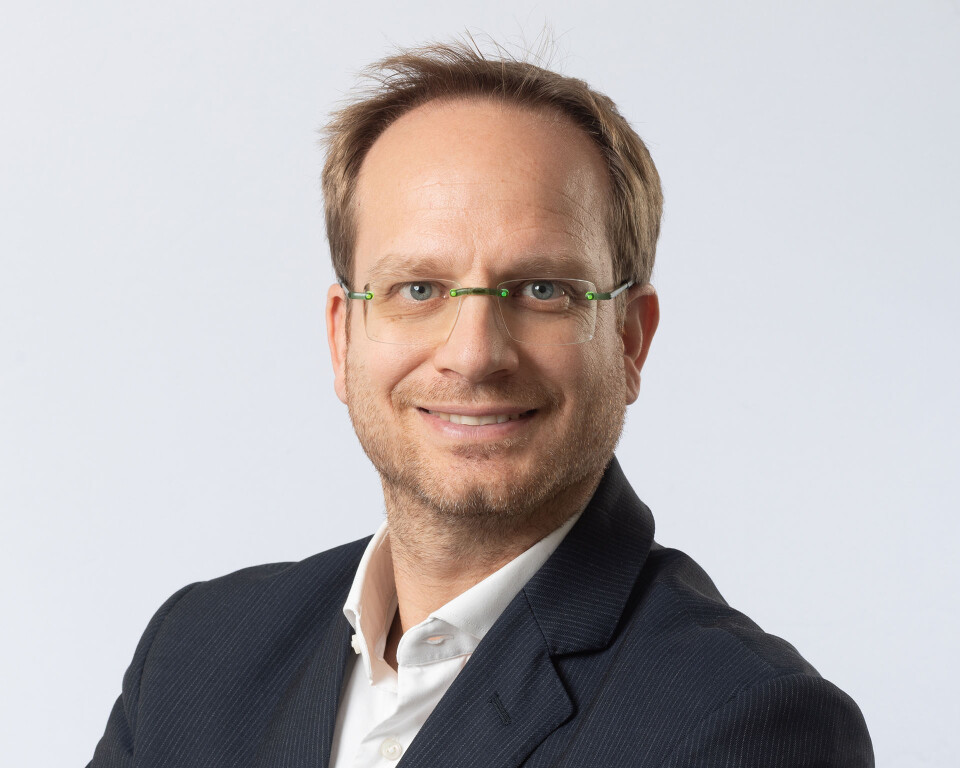
Mario Costa, Mileway’s Head of Development
Having built Europe’s largest last-mile logistics real estate portfolio primarily through acquisitions, with the backing of its shareholder Blackstone, Mileway is now making development an increasingly important strategic capability. From day one, the company has invested in refurbishing, improving and developing its portfolio; it is now building on that track record by unlocking further potential through site regeneration and selective ground-up development.
Mario Costa’s career in logistics real estate began well before Mileway, but he has been part of the company’s story from its first day. He joined in 2019 as Country Director for Italy, helping to establish the business in a market where it had no existing portfolio, and later took responsibility for Southern Europe before becoming Head of Development at pan-European level. For Costa, the move feels like a natural progression. He is personally excited by the sector’s continuing evolution and by the increasingly essential role logistics plays in the modern economy - keeping goods, services and businesses moving while connecting communities with what they need. The industry constantly broadens his perspective and gives him opportunities to learn, from the distinct requirements of last-mile logistics to the expanding expertise needed around ESG, energy and emerging uses such as micro-fulfilment centres, cold storage, industrial outdoor storage (IOS) and data centres. Development brings those strands together across the entire property lifecycle. It also takes him back to what he enjoyed most about Mileway from early years: building something, shaping a team and turning ideas into tangible projects. CRE Media Europe spoke with him about that journey and the development priorities ahead.
From portfolio insight to development decisions
What is Mileway’s development strategy, and how does the scale of the platform inform where you invest?
Mario Costa: Our strategy starts with well-located last-mile logistics sites, close to consumers, labour, transport networks and major economic centres. We then assess whether that location is supported by clear demand, limited modern supply and a credible opportunity to improve the site.
Our scale provides a strong evidence base. Operating across 10 countries and more than 100 cities allows us to compare demand, supply and development constraints, identify changing requirements earlier and transfer lessons between markets. But every project must still respond to local planning, infrastructure and customer needs. Our ongoing and future pipeline comprises more than 60 projects across 830,000 sqm.
Starting with the location
What makes an urban location strategically valuable—and how do you ensure the building remains relevant as customer needs change?
Mario Costa: Location directly affects delivery speed, cost and resilience. With more than 75% of Europeans living in urban areas, businesses increasingly need space close to the people and communities they serve. Mileway’s assets provide access to around 220 million people within a 30-minute drive—approximately 58% of the population in the countries where we operate—which gives us detailed insight into changing requirements across e-commerce, returns, servicing, light assembly, fleet transition and circular-economy activities.
Once we are confident in the location, the question becomes how to make the site work harder over time. Flexible layouts, sufficient power, energy-efficient systems, renewable energy, charging infrastructure and reliable performance data all contribute to a building’s long-term usefulness. The strongest projects combine an irreplaceable urban position with a specification that can adapt as operations evolve.
Choosing the right intervention
How do you decide whether to regenerate, redevelop or intensify an urban site?
Mario Costa: We look for the point where customer demand, limited modern supply and the potential to improve an established urban location converge. The appropriate response may be refurbishment, densification, redevelopment, a built-to-suit solution or selective ground-up development. Regenerating underused industrial sites can be particularly effective because it retains essential logistics capacity within the city while allowing scarce land to work harder.
Sometimes the right decision is not to proceed. We do not pursue development simply because a site has physical capacity. If demand, planning, infrastructure, cost or expected returns do not support the investment, we stop or reshape the project. Our European perspective helps us compare opportunities consistently, while accountability stays close to the local market.
Designing around customer needs
Beyond location, which customer requirements are having the greatest influence on the development brief?
Mario Costa: We start with the customer’s operation, not a standard checklist. Occupiers increasingly prioritise efficient buildings, adequate power, flexibility and reliable performance data. Depending on the site, the response may include LED lighting, efficient systems, electrified heating, rooftop solar, EV charging and smart metering.
The location and the building must work together. Bringing goods closer to customers and communities can support more efficient distribution, particularly when it is combined with route optimisation and fleet electrification. Our role is to translate those changing operational requirements into assets that perform reliably today and remain adaptable tomorrow.
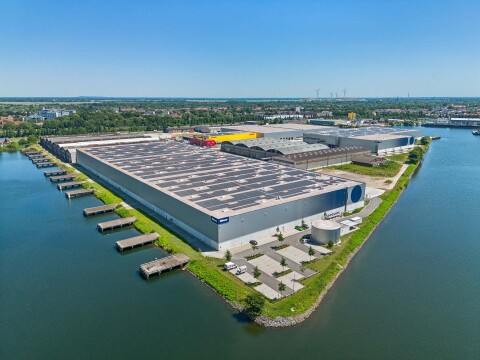
Mileway, Louis Krages Logistics Park in Bremen, Germany
Turning strategy into delivery
What does successful development look like in practice, and where can the capability make the greatest difference over the next three to five years?
Mario Costa: Success is a disciplined pipeline that responds to customer demand, improves established urban locations and delivers resilient, adaptable buildings. For standing assets, that means targeted operational improvements. For new developments, energy performance, electrification and renewable-energy potential need to be considered from the design stage.
Louis Krages Logistics Park in Bremen illustrates the approach. Its 4.2 MWp rooftop solar installation spans 46,500 sqm and comprises around 9,500 panels. Approximately one-third of the electricity generated is supplied directly to customers through long-term power agreements, with the remainder exported to the grid. It is a practical example of how a development can support both occupier energy needs and wider local capacity.
Across Europe, Mileway has already delivered more than 70 development projects totalling 625,000 sqm of new, expanded or refurbished logistics space. The priority now is to keep building a consistent European capability with strong local execution: comparing opportunities rigorously, keeping accountability close to the market and focusing investment where development can create durable value for customers and urban locations.

Subscribe now and stay informed
Joining the CRE Media Europe mailing list is quick and simple. Just provide your contact details below to be added to our distribution list and start receiving the latest news, magazines and special updates, all free of charge.
Commercial real estate (CRE) Media Europe is a free to access news and information service providing dependable, independent journalism. Our mission is to provide the pan-European real estate market with the latest trends and data points, and provide key analytical coverage to help you make better decisions in your business.
To discuss advertising and commercial partnership opportunities please contact eddie@cremediaeurope.com