KGAL’s Florian Martin: Deregulation is critical for market improvement
KGAL co‑CEO Florian Martin believes Europe’s real estate market is being reshaped by a fundamental imbalance between income streams and the rising costs of construction, regulation and refinancing.
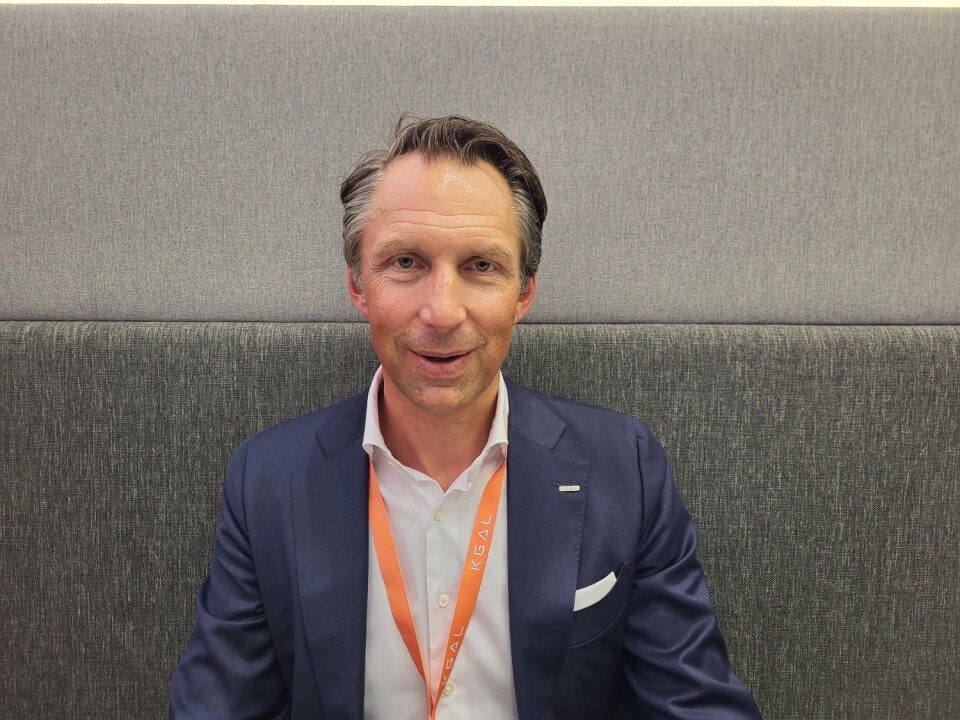
Florian Martin, co-CEO, KGAL
Speaking at Expo Real, he describes a sector under structural pressure rather than a temporary cycle, with office markets most exposed and residential increasingly constrained by policy.
Martin frames today’s market through an income versus denominator equation. The denominator, he argues, has expanded sharply across three fronts. “Construction costs are going up because of inflation, we are paying more for building materials and for people,” he says. Regulatory costs, particularly in Germany, have also escalated. And refinancing costs have entered a new cycle entirely. “We have to ask whether we are heading for a new euro crisis,” he notes. “All three denominator factors are rising.”
On the income side, Martin stresses that rental streams do not automatically track inflation. Once a lease ends, rents revert to market levels driven by demand and supply. This disconnect is most visible in the office sector.
Office demand structurally impaired
Martin sees the German office market facing a structural, not cyclical, decline. Supply remains high, while demand is shrinking, a trend he links directly to GDP growth and industrial performance. “Look at Germany,” he says. “The auto industry is letting people go. Home office work has had some impact, but the bigger issue is AI. Back‑office functions will be replaced, and demand will weaken further.”
His outlook is sobering: 40–50% of office space will face challenges due to location or obsolescence. “There is simply no demand,” he says. Business cases for office development, he argues, are now “really challenging,” especially in city outskirts.
Residential: demand exists, but income drives it
Residential demand remains higher than supply, but Martin warns that demand ultimately comes from income — and income is tied to the job market. He points to Stuttgart as an example, citing recent layoffs at Porsche and Daimler (Mercedes-Benz). “The residential market will come down,” he says. “A stable residential market can be hit hard by industrial change.”
Whether this pressure is cyclical or structural depends on GDP growth. Without strong growth, Martin believes both office and residential could face prolonged strain.
Affordable housing: the unavoidable trend
Martin argues that Germany’s biggest future trend will be affordable housing, driven by lower income growth and more single‑income households. But delivering affordability is nearly impossible under current conditions. “We cannot change refinancing costs,” he says. “We cannot change construction costs, they are tied to raw materials.”
He calls for faster permitting, reduced regulation and more realistic building standards. “In high‑density areas, you still have to install parking lots where cars are not needed,” he notes as just one example.
Refinancing: the next liquidity shock
Martin warns that refinancing will become a major stress point. Many assets were financed at sub‑1% interest rates; refinancing now requires 4–5%. With valuations down and LTVs obsolete, owners face higher costs and lower volumes. “Many cannot inject additional cash,” he says. “These assets will end up in bank NPL portfolios.”
A market needing realism
Only regulatory reform can restore feasibility, says Martin. “We need to control costs, adapt to reality and tackle the big issues,” he says. “Demand exists but without deregulation, development will not.’


Subscribe now and stay informed
Joining the CRE Media Europe mailing list is quick and simple. Just provide your contact details below to be added to our distribution list and start receiving the latest news, magazines and special updates, all free of charge.
Commercial real estate (CRE) Media Europe is a free to access news and information service providing dependable, independent journalism. Our mission is to provide the pan-European real estate market with the latest trends and data points, and provide key analytical coverage to help you make better decisions in your business.
To discuss advertising and commercial partnership opportunities please contact eddie@cremediaeurope.com